logo
prodotti
dettagli dei prodotti
Casa > prodotti >
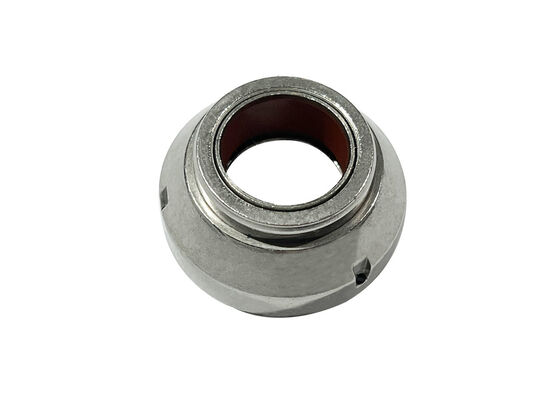
Custom Powder Metal Shock Absorber Guide for OEM Suspension Systems

Custom Powder Metal Shock Absorber Guide for OEM Suspension Systems

MOQ: 1000 pezzi
prezzo: negotiable
Imballaggio standard: scatola di cartone+pallet, o secondo i requisiti del cliente.
Periodo di consegna: 25 giorni lavorativi per i nuovi campioni
Metodo di pagamento: T/T, Western Union, L/C
Capacità di fornitura: 70,000pcs al mese
Informazioni dettagliate
Luogo di origine
Cina
Marca
XIAYI
Certificazione
ISO9001:2008
Numero di modello
XYJD-PM0417Z
Nome del prodotto:
guider della barretta
Materiale:
Personalizzato
Placcatura:
zinco, argento, nichel, ect del cromo.
Controllo qualità:
Ispezione al 100%.
Applicazione:
Ammortizzatore
Trattamento:
Vapore
Durezza:
HRB60-80
Spedizione:
Via mare, per via aerea o per compagnia espressa
Evidenziare:

Custom Powder Metal Guide

,

OEM Sintered Rod Guide

,

Suspension Guide Components

Descrizione del prodotto

Product Overview: XIAYI Custom Powder Metal Shock Absorber Guide — an OEM-grade sintered rod guide engineered from MPIF FC-0205 (DIN Sint C10) alloy powder. Featuring precision dimensional tolerance per ISO 2768-m, controlled steam oxidation treatment (Fe₃O₄ layer 0.004-0.005 mm), and comprehensive material customization options. Designed for high-volume suspension system manufacturing with 70,000 pcs/month capacity.

Product Description

XIAYI specializes in custom powder metallurgy manufacturing, delivering high-precision sintered rod guides for OEM shock absorber and suspension system applications. This guide component is produced from MPIF 35 FC-0205 (equivalent to DIN 30910-4 Sint C10) — an iron-based alloy powder with balanced copper (1.5-3.9%) and carbon (0.3-0.6%) content that delivers optimal mechanical properties after compaction and sintering.

The component undergoes a 2-hour steam oxidation process that forms a dense, uniform Fe₃O₄ (magnetite) layer measuring 0.004-0.005 mm in thickness, achieving an oxidation degree of 2-4%. This treatment provides excellent corrosion resistance, seals surface porosity, and delivers the characteristic dark finish without compromising the tight ISO 2768-m dimensional tolerances maintained throughout the manufacturing process.

With a post-oxidation density of 6.4-6.9 g/cm³ and hardness ranging from 60-115 HRB (tested at 1 kN load with 1/16" ball indenter), this guide delivers the mechanical integrity required for millions of suspension cycles. Surface appearance is rigorously controlled — no crumbling, cracks, exfoliation, voids, looseness, or metal pitting defects are permitted, and 100% inspection ensures consistent quality across every production batch.

Technical Specifications
ParameterSpecification
Product NameSintered Powder Metallurgy Rod Guide
Model NumberXYJD-PM0417Z
Material StandardMPIF 35 FC-0205 / DIN 30910-4 Sint C10
Chemical CompositionFe Balance, Cu 1.5-3.9%, C 0.3-0.6%
Density (Post-Oxidation)6.4 - 6.9 g/cm³
Hardness60 - 115 HRB (1 kN, 1/16" ball)
Surface TreatmentSteam Oxidation — 2 hours, Fe₃O₄ layer: 0.004-0.005 mm
Oxidation Degree2 - 4%
Dimensional ToleranceISO 2768 - m / H14, h14, ± IT14/2
Net Weight101.44 g
DimensionsD47 × D22.5 × 21.5 mm (customizable)
Available Materials & Surface Treatments
Material Options
CategoryMaterial Type
Copper-BasedP/M Copper and Copper Alloys
Iron-BasedP/M Iron and Carbon Steel
Iron-CopperIron-Copper and Copper Steel
Iron-NickelIron-Nickel and Nickel Steel
Low AlloyLow Alloy Steel / Diffusion Alloyed Steel
HardenedSinter Hardened Steel / Commix Low Alloy Steel
InfiltratedCopper Infiltrated Iron and Steel
Surface Treatment Options
TreatmentApplication Benefit
Steam OxidationCorrosion resistance + surface sealing
Sand BlastingSurface cleaning + texture uniformity
Zinc/Chrome PlatingDecorative + barrier protection
Rust-Preventive TreatmentStorage and transit protection
PaintingCustom color + basic corrosion barrier
ElectrophoresisUniform coating coverage
Powder CoatingHeavy-duty corrosion protection
Key Features & Advantages
  1. Precision Mold-Based Production: Every guide is produced from high-precision tooling, ensuring consistent dimensional accuracy and repeatability across production batches. ISO 2768-m tolerance standards are maintained without secondary machining, significantly reducing per-unit cost at volume.
  2. Cost-Effective Mass Production: The powder metallurgy process is inherently suited for automated, high-volume manufacturing. With a monthly capacity of 70,000 pieces, XIAYI delivers competitive pricing without sacrificing quality or consistency.
  3. Flexible Material Engineering: We offer extensive material formulation capabilities across Fe-Cu-Ni alloy systems, enabling precise tuning of density, hardness, wear resistance, and magnetic properties to match specific application requirements.
  4. Controlled Steam Oxidation: The 2-hour steam treatment produces a uniform Fe₃O₄ layer at precisely 0.004-0.005 mm thickness with 2-4% oxidation degree — a tightly controlled window that balances corrosion protection with dimensional stability.
  5. 100% Quality Inspection: Every component undergoes visual and dimensional inspection. Surface defects (crumbling, cracks, exfoliation, voids, pitting) are strictly rejected per our zero-defect appearance standard.
Manufacturing Process

Powder Mixing (Fe-Cu-C) → Compacting → Sintering → Sizing/Resizing → Cleaning → Steam Oxidation (2h) → 100% Inspection → Vacuum Oiling → Packing

XIAYI Powder Metallurgy Product Portfolio
  • Valve Plates, Helix Gears, Air Cylinder Components
  • ABS Sensor Rings, Pulleys, Sprocket Wheels, Spur Gears
  • Shock Absorber Spare Parts (Pistons, Guides, Foot Valves)
  • Lock Accessories, Oil Pump Rotors & Gears
  • Transmission Gears, Bevel Gears, Helical Gears
  • Sleeves, Bushings, Copper Sleeves, Sleeve Bearings
  • Structural Parts, Nuts, Rotors, Stators
Competitive Advantages
  1. Very Tight Tolerance Capability: ISO 2768-m / H14 / ±IT14/2 precision maintained through controlled compaction and sizing, eliminating the need for costly post-machining in most applications.
  2. Uniform Heat & Steam Treatment: Multi-zone sintering furnaces with precise atmosphere control ensure consistent metallurgical properties and surface treatment quality across every component in every batch.
  3. Precise Metal-Working Finishing: When secondary operations are required, our in-house CNC machining, grinding, and lapping capabilities maintain tight tolerances on critical functional surfaces.
  4. Higher Mechanical Performance: Optimized powder formulations and compaction parameters deliver density and hardness values at the upper end of the MPIF standard range, translating to superior in-service durability.
  5. Professional Technical Service: Our engineering team provides DFM (Design for Manufacturability) feedback during the quoting phase, often identifying opportunities to reduce cost or improve performance before tooling begins.
Applications
  • Automotive Shock Absorber Parts
  • Motorcycle Suspension Components
  • Pump Valve and Rotor Parts
  • Locomotive Damping Systems
  • Industrial Machinery Components
  • Power Tool Structural Parts
Packaging & Logistics
DetailSpecification
PackagingCarton box + pallet, or as per customer requirements
Monthly Supply Capacity70,000 pcs
Minimum Order Quantity1,000 pcs
New Sample Lead Time25 working days
ShippingBy sea, air, or express courier
Payment TermsT/T, Western Union, L/C
Frequently Asked Questions

Q: What is MPIF FC-0205 material and why is it used for shock absorber guides?

MPIF 35 FC-0205 (equivalent to DIN 30910-4 Sint C10) is an iron-based powder metallurgy alloy containing approximately 1.5-3.9% copper and 0.3-0.6% carbon. The copper enhances sinterability, corrosion resistance, and toughness, while the carbon provides hardenability and strength. This balanced composition delivers 6.4-6.9 g/cm³ density after compaction and 60-115 HRB hardness, making it ideal for shock absorber rod guides that must withstand millions of cyclic loads while maintaining precise rod-to-seal alignment.

Q: What does the steam oxidation treatment achieve?

Steam oxidation is a controlled thermal process where sintered components are exposed to superheated steam (approximately 500-550°C) for 2 hours. The steam reacts with the iron surface to form a uniform Fe₃O₄ (magnetite) layer measuring 0.004-0.005 mm thick with an oxidation degree of 2-4%. This treatment seals surface porosity against fluid ingress, provides excellent rust resistance during storage and service, enhances surface hardness without affecting core properties, and produces a consistent dark finish — all while maintaining ISO 2768-m dimensional tolerances.

Q: Can you customize the material, dimensions, and surface treatment for our specific application?

Yes, customization is our core capability. Beyond the standard FC-0205 composition, we can formulate custom Fe-Cu-Ni alloy powders to achieve specific density, hardness, wear resistance, or magnetic property targets. Dimensions can be fully customized — the D47×D22.5×21.5 mm shown is one of many configurations we produce. Surface treatments range from steam oxidation to zinc/chrome plating, electrophoresis, powder coating, and painting. Our engineering team provides DFM analysis on your design to optimize for powder metallurgy production.

Q: What tolerances can you hold on sintered powder metal guides?

We maintain ISO 2768-m (medium) tolerance class as standard, with specific features held to H14, h14, or ±IT14/2 as specified. For critical functional surfaces (bore ID, rod contact faces), we can achieve tighter tolerances through post-sintering sizing operations. Our in-house CMM (Coordinate Measuring Machine) and pneumatic gauging systems verify dimensional compliance on every production batch. For automotive OEM applications, we provide full dimensional capability studies (Cpk/Ppk) as part of PPAP documentation.

Q: What is your production capacity and typical lead time for new custom projects?

Our monthly production capacity is 70,000 pieces for shock absorber guide components, supported by multiple mechanical (50T-140T) and hydraulic (100T-800T) presses. For new custom designs requiring tooling development, the lead time is approximately 25 working days. For repeat orders with existing tooling, standard production lead time is 2-3 weeks. Express shipping options (air freight, courier) are available for urgent requirements.

Q: How do you ensure consistent quality across large production volumes?

We employ 100% visual and dimensional inspection on every component, rejecting any parts showing surface defects (crumbling, cracks, exfoliation, voids, looseness, or pitting). In-process quality controls include: SPC monitoring of press tonnage and compaction density, batch-level hardness testing (HRB, 1 kN load, 1/16" ball), metallurgical microstructure analysis, CMM 3D dimensional verification, steam oxidation thickness measurement, and surface roughness profilometry. Material certifications are provided with every shipment.

Q: What other powder metallurgy products do you manufacture?

Beyond shock absorber rod guides, XIAYI produces a comprehensive range of sintered powder metallurgy components including: valve plates, helical gears and spur gears, air cylinder components, ABS sensor rings, pulleys and timing pulleys, sprocket wheels, lock accessories, oil pump rotors and gears, sleeve bearings and bushings, structural parts, rotors, stators, and various custom automotive, motorcycle, and industrial machinery parts. If your application involves a metal component produced in volume, powder metallurgy may be a cost-effective alternative to machining or casting.

Q: What certifications do you hold and do you support automotive OEM requirements?

XIAYI is ISO 9001:2008 certified. We are experienced in supplying Tier-1 and Tier-2 automotive manufacturers and can provide PPAP (Production Part Approval Process) documentation including PFMEA, control plans, process flow diagrams, material certifications, dimensional reports, and capability studies. Our quality management system supports the full APQP (Advanced Product Quality Planning) process from design review through production launch.

prodotti
dettagli dei prodotti
Custom Powder Metal Shock Absorber Guide for OEM Suspension Systems
MOQ: 1000 pezzi
prezzo: negotiable
Imballaggio standard: scatola di cartone+pallet, o secondo i requisiti del cliente.
Periodo di consegna: 25 giorni lavorativi per i nuovi campioni
Metodo di pagamento: T/T, Western Union, L/C
Capacità di fornitura: 70,000pcs al mese
Informazioni dettagliate
Luogo di origine
Cina
Marca
XIAYI
Certificazione
ISO9001:2008
Numero di modello
XYJD-PM0417Z
Nome del prodotto:
guider della barretta
Materiale:
Personalizzato
Placcatura:
zinco, argento, nichel, ect del cromo.
Controllo qualità:
Ispezione al 100%.
Applicazione:
Ammortizzatore
Trattamento:
Vapore
Durezza:
HRB60-80
Spedizione:
Via mare, per via aerea o per compagnia espressa
Quantità di ordine minimo:
1000 pezzi
Prezzo:
negotiable
Imballaggi particolari:
scatola di cartone+pallet, o secondo i requisiti del cliente.
Tempi di consegna:
25 giorni lavorativi per i nuovi campioni
Termini di pagamento:
T/T, Western Union, L/C
Capacità di alimentazione:
70,000pcs al mese
Evidenziare

Custom Powder Metal Guide

,

OEM Sintered Rod Guide

,

Suspension Guide Components

Descrizione del prodotto

Product Overview: XIAYI Custom Powder Metal Shock Absorber Guide — an OEM-grade sintered rod guide engineered from MPIF FC-0205 (DIN Sint C10) alloy powder. Featuring precision dimensional tolerance per ISO 2768-m, controlled steam oxidation treatment (Fe₃O₄ layer 0.004-0.005 mm), and comprehensive material customization options. Designed for high-volume suspension system manufacturing with 70,000 pcs/month capacity.

Product Description

XIAYI specializes in custom powder metallurgy manufacturing, delivering high-precision sintered rod guides for OEM shock absorber and suspension system applications. This guide component is produced from MPIF 35 FC-0205 (equivalent to DIN 30910-4 Sint C10) — an iron-based alloy powder with balanced copper (1.5-3.9%) and carbon (0.3-0.6%) content that delivers optimal mechanical properties after compaction and sintering.

The component undergoes a 2-hour steam oxidation process that forms a dense, uniform Fe₃O₄ (magnetite) layer measuring 0.004-0.005 mm in thickness, achieving an oxidation degree of 2-4%. This treatment provides excellent corrosion resistance, seals surface porosity, and delivers the characteristic dark finish without compromising the tight ISO 2768-m dimensional tolerances maintained throughout the manufacturing process.

With a post-oxidation density of 6.4-6.9 g/cm³ and hardness ranging from 60-115 HRB (tested at 1 kN load with 1/16" ball indenter), this guide delivers the mechanical integrity required for millions of suspension cycles. Surface appearance is rigorously controlled — no crumbling, cracks, exfoliation, voids, looseness, or metal pitting defects are permitted, and 100% inspection ensures consistent quality across every production batch.

Technical Specifications
ParameterSpecification
Product NameSintered Powder Metallurgy Rod Guide
Model NumberXYJD-PM0417Z
Material StandardMPIF 35 FC-0205 / DIN 30910-4 Sint C10
Chemical CompositionFe Balance, Cu 1.5-3.9%, C 0.3-0.6%
Density (Post-Oxidation)6.4 - 6.9 g/cm³
Hardness60 - 115 HRB (1 kN, 1/16" ball)
Surface TreatmentSteam Oxidation — 2 hours, Fe₃O₄ layer: 0.004-0.005 mm
Oxidation Degree2 - 4%
Dimensional ToleranceISO 2768 - m / H14, h14, ± IT14/2
Net Weight101.44 g
DimensionsD47 × D22.5 × 21.5 mm (customizable)
Available Materials & Surface Treatments
Material Options
CategoryMaterial Type
Copper-BasedP/M Copper and Copper Alloys
Iron-BasedP/M Iron and Carbon Steel
Iron-CopperIron-Copper and Copper Steel
Iron-NickelIron-Nickel and Nickel Steel
Low AlloyLow Alloy Steel / Diffusion Alloyed Steel
HardenedSinter Hardened Steel / Commix Low Alloy Steel
InfiltratedCopper Infiltrated Iron and Steel
Surface Treatment Options
TreatmentApplication Benefit
Steam OxidationCorrosion resistance + surface sealing
Sand BlastingSurface cleaning + texture uniformity
Zinc/Chrome PlatingDecorative + barrier protection
Rust-Preventive TreatmentStorage and transit protection
PaintingCustom color + basic corrosion barrier
ElectrophoresisUniform coating coverage
Powder CoatingHeavy-duty corrosion protection
Key Features & Advantages
  1. Precision Mold-Based Production: Every guide is produced from high-precision tooling, ensuring consistent dimensional accuracy and repeatability across production batches. ISO 2768-m tolerance standards are maintained without secondary machining, significantly reducing per-unit cost at volume.
  2. Cost-Effective Mass Production: The powder metallurgy process is inherently suited for automated, high-volume manufacturing. With a monthly capacity of 70,000 pieces, XIAYI delivers competitive pricing without sacrificing quality or consistency.
  3. Flexible Material Engineering: We offer extensive material formulation capabilities across Fe-Cu-Ni alloy systems, enabling precise tuning of density, hardness, wear resistance, and magnetic properties to match specific application requirements.
  4. Controlled Steam Oxidation: The 2-hour steam treatment produces a uniform Fe₃O₄ layer at precisely 0.004-0.005 mm thickness with 2-4% oxidation degree — a tightly controlled window that balances corrosion protection with dimensional stability.
  5. 100% Quality Inspection: Every component undergoes visual and dimensional inspection. Surface defects (crumbling, cracks, exfoliation, voids, pitting) are strictly rejected per our zero-defect appearance standard.
Manufacturing Process

Powder Mixing (Fe-Cu-C) → Compacting → Sintering → Sizing/Resizing → Cleaning → Steam Oxidation (2h) → 100% Inspection → Vacuum Oiling → Packing

XIAYI Powder Metallurgy Product Portfolio
  • Valve Plates, Helix Gears, Air Cylinder Components
  • ABS Sensor Rings, Pulleys, Sprocket Wheels, Spur Gears
  • Shock Absorber Spare Parts (Pistons, Guides, Foot Valves)
  • Lock Accessories, Oil Pump Rotors & Gears
  • Transmission Gears, Bevel Gears, Helical Gears
  • Sleeves, Bushings, Copper Sleeves, Sleeve Bearings
  • Structural Parts, Nuts, Rotors, Stators
Competitive Advantages
  1. Very Tight Tolerance Capability: ISO 2768-m / H14 / ±IT14/2 precision maintained through controlled compaction and sizing, eliminating the need for costly post-machining in most applications.
  2. Uniform Heat & Steam Treatment: Multi-zone sintering furnaces with precise atmosphere control ensure consistent metallurgical properties and surface treatment quality across every component in every batch.
  3. Precise Metal-Working Finishing: When secondary operations are required, our in-house CNC machining, grinding, and lapping capabilities maintain tight tolerances on critical functional surfaces.
  4. Higher Mechanical Performance: Optimized powder formulations and compaction parameters deliver density and hardness values at the upper end of the MPIF standard range, translating to superior in-service durability.
  5. Professional Technical Service: Our engineering team provides DFM (Design for Manufacturability) feedback during the quoting phase, often identifying opportunities to reduce cost or improve performance before tooling begins.
Applications
  • Automotive Shock Absorber Parts
  • Motorcycle Suspension Components
  • Pump Valve and Rotor Parts
  • Locomotive Damping Systems
  • Industrial Machinery Components
  • Power Tool Structural Parts
Packaging & Logistics
DetailSpecification
PackagingCarton box + pallet, or as per customer requirements
Monthly Supply Capacity70,000 pcs
Minimum Order Quantity1,000 pcs
New Sample Lead Time25 working days
ShippingBy sea, air, or express courier
Payment TermsT/T, Western Union, L/C
Frequently Asked Questions

Q: What is MPIF FC-0205 material and why is it used for shock absorber guides?

MPIF 35 FC-0205 (equivalent to DIN 30910-4 Sint C10) is an iron-based powder metallurgy alloy containing approximately 1.5-3.9% copper and 0.3-0.6% carbon. The copper enhances sinterability, corrosion resistance, and toughness, while the carbon provides hardenability and strength. This balanced composition delivers 6.4-6.9 g/cm³ density after compaction and 60-115 HRB hardness, making it ideal for shock absorber rod guides that must withstand millions of cyclic loads while maintaining precise rod-to-seal alignment.

Q: What does the steam oxidation treatment achieve?

Steam oxidation is a controlled thermal process where sintered components are exposed to superheated steam (approximately 500-550°C) for 2 hours. The steam reacts with the iron surface to form a uniform Fe₃O₄ (magnetite) layer measuring 0.004-0.005 mm thick with an oxidation degree of 2-4%. This treatment seals surface porosity against fluid ingress, provides excellent rust resistance during storage and service, enhances surface hardness without affecting core properties, and produces a consistent dark finish — all while maintaining ISO 2768-m dimensional tolerances.

Q: Can you customize the material, dimensions, and surface treatment for our specific application?

Yes, customization is our core capability. Beyond the standard FC-0205 composition, we can formulate custom Fe-Cu-Ni alloy powders to achieve specific density, hardness, wear resistance, or magnetic property targets. Dimensions can be fully customized — the D47×D22.5×21.5 mm shown is one of many configurations we produce. Surface treatments range from steam oxidation to zinc/chrome plating, electrophoresis, powder coating, and painting. Our engineering team provides DFM analysis on your design to optimize for powder metallurgy production.

Q: What tolerances can you hold on sintered powder metal guides?

We maintain ISO 2768-m (medium) tolerance class as standard, with specific features held to H14, h14, or ±IT14/2 as specified. For critical functional surfaces (bore ID, rod contact faces), we can achieve tighter tolerances through post-sintering sizing operations. Our in-house CMM (Coordinate Measuring Machine) and pneumatic gauging systems verify dimensional compliance on every production batch. For automotive OEM applications, we provide full dimensional capability studies (Cpk/Ppk) as part of PPAP documentation.

Q: What is your production capacity and typical lead time for new custom projects?

Our monthly production capacity is 70,000 pieces for shock absorber guide components, supported by multiple mechanical (50T-140T) and hydraulic (100T-800T) presses. For new custom designs requiring tooling development, the lead time is approximately 25 working days. For repeat orders with existing tooling, standard production lead time is 2-3 weeks. Express shipping options (air freight, courier) are available for urgent requirements.

Q: How do you ensure consistent quality across large production volumes?

We employ 100% visual and dimensional inspection on every component, rejecting any parts showing surface defects (crumbling, cracks, exfoliation, voids, looseness, or pitting). In-process quality controls include: SPC monitoring of press tonnage and compaction density, batch-level hardness testing (HRB, 1 kN load, 1/16" ball), metallurgical microstructure analysis, CMM 3D dimensional verification, steam oxidation thickness measurement, and surface roughness profilometry. Material certifications are provided with every shipment.

Q: What other powder metallurgy products do you manufacture?

Beyond shock absorber rod guides, XIAYI produces a comprehensive range of sintered powder metallurgy components including: valve plates, helical gears and spur gears, air cylinder components, ABS sensor rings, pulleys and timing pulleys, sprocket wheels, lock accessories, oil pump rotors and gears, sleeve bearings and bushings, structural parts, rotors, stators, and various custom automotive, motorcycle, and industrial machinery parts. If your application involves a metal component produced in volume, powder metallurgy may be a cost-effective alternative to machining or casting.

Q: What certifications do you hold and do you support automotive OEM requirements?

XIAYI is ISO 9001:2008 certified. We are experienced in supplying Tier-1 and Tier-2 automotive manufacturers and can provide PPAP (Production Part Approval Process) documentation including PFMEA, control plans, process flow diagrams, material certifications, dimensional reports, and capability studies. Our quality management system supports the full APQP (Advanced Product Quality Planning) process from design review through production launch.

宁波夏亿机电科技有限公司